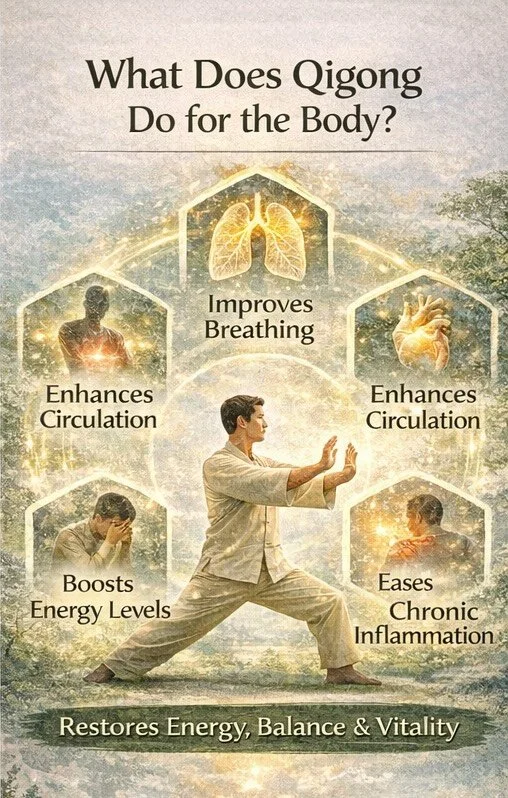
What Does Qigong Do for the Body?
by Christopher Grant, Great Energy
People often ask a very simple question.
What does Qigong actually do for the body?
When you first see Qigong, it can look almost too gentle to matter. The movements are slow. The breathing is relaxed. Nothing looks extreme or athletic.
And yet people who practice regularly often notice something very clear.
They feel better.
Their body becomes calmer. Their breathing deepens. Their energy improves. Pain begins to ease. Sleep improves. The nervous system settles.
From the outside it can look simple.
From the inside, many systems in the body are being restored at the same time.
If you are new to Qigong, it may help to first understand the foundation described in What Is Qigong?
How does Qigong affect the body?
In traditional Chinese medicine, health depends on the smooth circulation of life force energy, called qi.
When qi moves freely through the body, systems work the way they are meant to. Circulation improves. Breathing becomes fuller. Digestion works more efficiently. The nervous system can return to balance.
When qi becomes stuck or depleted, the opposite begins to happen. Tension builds. The breath becomes shallow. Stress hormones rise. The body stays in a subtle survival state, stress and tension grow.
Qigong works by restoring this circulation.
Through slow movement, relaxed breathing, and focused awareness, the body begins to unwind the tension patterns that interrupt the natural flow of energy.
Many people experience this within the first few sessions.
The shoulders drop. The jaw relaxes. The breath deepens. The body begins to feel safe again.
This is why many people exploring Qigong are also curious about How Qigong Regulates the Nervous System
Does Qigong improve circulation and mobility?
One of the most immediate physical effects of Qigong is improved circulation.
Unlike intense workouts that rely on force or speed, Qigong uses relaxed movement to gently open the body.
When the joints move slowly and continuously, blood flow improves and the connective tissues begin to soften. This helps the body release long held tension patterns.
Many students notice changes in areas that have felt stiff for years.
The spine becomes more mobile. The hips feel lighter. The shoulders regain freedom.
Because the movements are gentle and adaptable, Qigong can be practiced by people of many ages and fitness levels.
You can learn more about how the practice itself works in What Is Qigong Practice?
Can Qigong reduce stress in the body?
Modern life keeps many people in a constant stress response.
The nervous system remains slightly activated even when the body is trying to rest.
Over time this state of chronic activation can affect sleep, digestion, inflammation, and emotional regulation.
Qigong helps reverse that pattern.
The combination of slow movement and breath awareness activates the parasympathetic nervous system, which is the body’s natural recovery mode.
This shift allows the heart rate to settle, the breath to deepen, and the body to begin repairing itself.
Research summarized by Harvard Health Publishing shows that gentle meditative movement practices such as Qigong and Tai Chi can improve balance, stress resilience, and overall well being.
These benefits often grow gradually as the body becomes more familiar with the practice.
Why do people feel more energy after Qigong?
One of the paradoxes of Qigong is that it often increases energy while the movements themselves are calm and relaxed.
Many exercise systems create energy by stimulating the body and increasing adrenaline.
Qigong works differently.
Instead of stimulating the system, it removes the patterns that drain energy in the first place.
When tension releases and breathing becomes more efficient, the body spends less energy maintaining stress.
People often notice that their natural vitality begins to return.
They feel clearer mentally. Their body feels lighter. Daily activities require less effort.
This is part of what people are referring to when they ask Why Is Qigong So Powerful?
Is Qigong similar to yoga for the body?
Both Qigong and yoga can improve flexibility, breathing, and overall health.
However the experience of the two practices can feel quite different.
Yoga often focuses on holding postures or building strength through poses. Qigong emphasizes continuous movement and energetic flow.
Many people find Qigong especially supportive when the body feels tired, inflamed, or overwhelmed by stress.
Because the movements are gentle and adaptable, the practice meets the body where it is rather than asking the body to push beyond its limits.
If you are curious about the deeper differences, this is explored inWhat Is Healing Qigong and How It Differs from Yoga
and
Qigong vs Yoga: How Are They Different and Which Is Better
What changes over time with Qigong practice?
In the beginning, many people notice simple physical changes.
The body relaxes more easily. Breathing improves. Sleep becomes deeper.
With continued practice, the effects often deepen.
Posture improves because the spine begins to reorganize itself naturally. The nervous system becomes more resilient to stress. Many people also report feeling more present and grounded in daily life.
Qigong works gradually, the same way nature restores balance in the body over time.
It is less about forcing change and more about creating the conditions where the body can return to its natural state of harmony.
For many practitioners, this is the real gift of the practice.
The body remembers how to heal.
Frequently Asked Questions
Does Qigong really change the body?
Yes. Regular Qigong practice can change the body in several ways. The slow movements improve circulation and joint mobility, the breathing calms the nervous system, and the relaxed posture reduces long-held muscular tension. Over time many practitioners notice improvements in energy, balance, sleep, and overall physical comfort.
How long does it take to feel the effects of Qigong?
Many people feel subtle changes in the first session. The body often relaxes, breathing deepens, and the mind becomes quieter. Deeper physical and energetic changes usually develop gradually with consistent practice over weeks and months.
Is Qigong safe for older adults or beginners?
Yes. One of the reasons Qigong has been practiced for thousands of years is that it is gentle and adaptable. Movements can be done standing, seated, or even lying down. This makes the practice accessible to beginners, older adults, and people recovering from stress or illness.
Can Qigong help with stress and anxiety?
Qigong is widely used as a nervous system regulation practice. Slow breathing and relaxed movement activate the body’s parasympathetic response, which helps reduce stress hormones and restore a sense of calm. Many people find it easier to relax through movement than through still meditation alone.
You can learn more about this process inHow Qigong Regulates the Nervous System
Is Qigong exercise or meditation?
It is both. Qigong is often described as moving meditation. The body moves gently while attention rests on breath, posture, and awareness. This combination allows physical exercise and meditative calm to develop at the same time.