
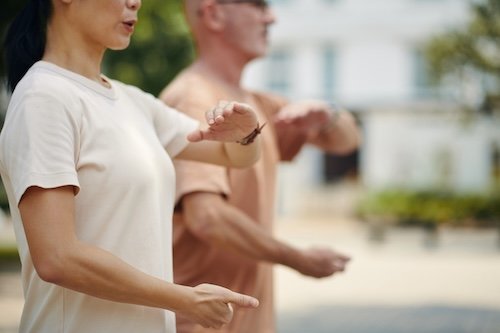
Why Is Qigong So Powerful?
A Nervous System and Physiology Perspective
by Christopher Grant, Great Energy
Qigong is powerful because it works directly with the regulatory systems that determine how we feel, heal, and function.
At its foundation, Qigong combines slow movement, regulated breathing, and focused awareness. These three elements influence the autonomic nervous system, inflammatory pathways, circulation, and emotional processing.
If you are new to Qigong and want a general overview, begin with our What Is Qigong Practice? Benefits, Meditation, and How to Begin guide.
Here, we’ll look more closely at why the practice produces measurable change.
How Qigong Regulates the Nervous System
One of the clearest mechanisms behind Qigong’s effectiveness is its impact on autonomic regulation.
The autonomic nervous system has two primary branches.
Sympathetic activation is associated with stress and mobilization.
Parasympathetic activation supports recovery, repair, and restoration.
Modern life keeps many people in a pattern of sympathetic dominance. Elevated cortisol, shallow breathing, muscular tension, and reduced vagal tone become baseline physiology.
Slow, diaphragmatic breathing combined with gentle rhythmic movement increases vagal tone and improves heart-rate variability. Heart-rate variability is widely used as a marker of nervous system resilience.
Research summarized by the National Center for Complementary and Integrative Health reports improvements in stress markers, mood regulation, and quality of life among Qigong practitioners.
In practical terms, Qigong trains the body to return to baseline more efficiently after stress.
For a deeper discussion on embodiment and regulation, see Have You Ever Tried to Think Your Way to Calm?
Why Breath Regulation Changes the Body
Qigong emphasizes slow nasal breathing with extended exhalation.
This breathing pattern:
reduces sympathetic arousal
improves oxygen–carbon dioxide balance
signals safety through vagal pathways
supports cardiovascular efficiency
Breath pacing alone has measurable effects on blood pressure and heart-rate variability.
When breath regulation is combined with coordinated movement, the effect becomes more pronounced.
Over time, practitioners often report reduced anxiety, improved sleep, and greater emotional steadiness. These outcomes align with shifts in autonomic tone and nervous system regulation.
How Qigong Movement Improves Circulation and Fascia
Qigong movements are typically circular, continuous, and low impact.
From a biomechanical perspective, this style of movement:
enhances lymphatic circulation
improves joint lubrication
stimulates fascial hydration
reduces muscular guarding
Unlike high-intensity training, Qigong builds capacity without elevating stress hormones.
This makes it particularly supportive for individuals navigating fatigue, autoimmune conditions, burnout, or chronic stress.
Research published in journals such as the Journal of Alternative and Complementary Medicine has documented improvements in balance, inflammatory markers, and perceived wellbeing among Qigong practitioners.
The Meridian Model and the Concept of Energy Flow
In Traditional Chinese Medicine, Qigong supports the circulation of Qi through meridian pathways.
Western physiology describes circulation and nerve signaling differently, yet both systems recognize that stagnation in the body often corresponds with dysfunction.
Gentle repetitive movement paired with awareness increases interoception, the ability to sense internal bodily states.
Improved interoception is strongly associated with emotional regulation and reduced physiological reactivity.
For a fuller explanation of meridians and traditional theory, see What Is Qigong? Definition, History, and How It Works.
Why Qigong Helps Emotional Regulation
Emotional states are not abstract experiences. They are physiological patterns.
Chronic anxiety, grief, and anger correspond with measurable changes in breath pattern, muscle tone, and heart rhythm.
By restoring slower breathing, relaxed posture, and rhythmic movement, Qigong alters the physiological conditions that sustain emotional distress.
Rather than suppressing emotion, the practice shifts the internal environment in which emotion is processed.
Over time, this builds greater capacity for response instead of reactivity.
Why Gentle Practices Often Produce Lasting Change
The effectiveness of Qigong lies in its cumulative impact.
Ten to fifteen minutes of daily practice can:
improve autonomic flexibility
increase interoceptive awareness
support inflammatory balance
strengthen emotional steadiness
These adaptations occur gradually and predictably.
Qigong is less about intensity and more about repetition. The body responds to consistent signals of safety and coherence.
Many of these changes begin with simple physical shifts in the body. We describe them in What Does Qigong Do for the Body?
Those who wish to deepen their study often begin with Beginning Healing Qigong or explore professional pathways such as Great Energy Qigong Certification.
Closing Perspective
Qigong is powerful because it works directly with the body’s regulatory systems.
Breath influences heart rhythm
Movement influences circulation
Awareness influences the body’s perception of safety
When these systems become coherent, healing processes become more accessible.
This is not abstract, it is physiology practiced with attention.
Common Questions About Qigong
Does Qigong regulate the nervous system?
Yes. Qigong combines slow movement, diaphragmatic breathing, and focused attention.
These elements stimulate the parasympathetic nervous system and increase vagal tone.
Over time this can improve stress resilience, emotional regulation, and heart-rate variability.
How long does it take for Qigong to work?
Many people notice a calming effect after a single session. Long-term changes usually appear with consistent practice.
Ten to fifteen minutes per day is enough to begin improving breathing patterns, posture, and nervous system regulation.
Is Qigong scientifically proven?
Research published in journals such as the American Journal of Health Promotion and Complementary Therapies in Medicine has documented improvements in stress levels, balance, mood, and overall wellbeing among Qigong practitioners.
Is Qigong better than yoga for stress?
Both practices can regulate the nervous system.
Qigong tends to emphasize slower movements and continuous breathing patterns, which some people find especially helpful for stress regulation and fatigue recovery.
References
National Center for Complementary and Integrative Health. Tai Chi and Qigong: What You Need to Know. Updated 2024.