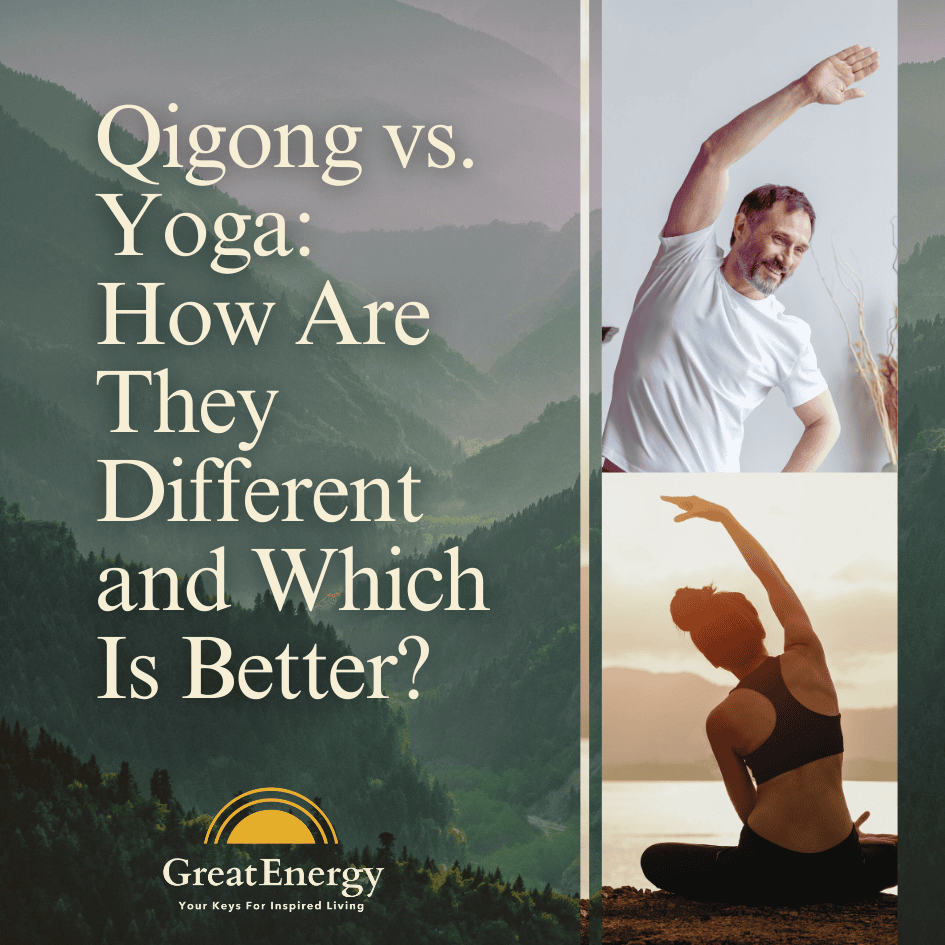
Qigong vs. Yoga:
How Are They Different and Which Is Better?
by Christopher Grant, co-founder of GreatEnergy.org
I’m often asked whether Qigong or Yoga is better, and I understand why the question comes up. Most people asking aren’t beginners to wellness. They’ve tried different approaches to wellness, likely including yoga or other exercise. They’ve invested time. They’re paying attention to how their body responds, not just during practice, but afterward and over months and years.
I’m certified in both Yoga and Qigong, and I’ve taught thousands of students across a wide range of ages and health conditions. What I’ve learned is that this question usually isn’t about choosing sides. It’s about health, sustainability, and whether there’s a way to feel better without constantly pushing or bypassing.
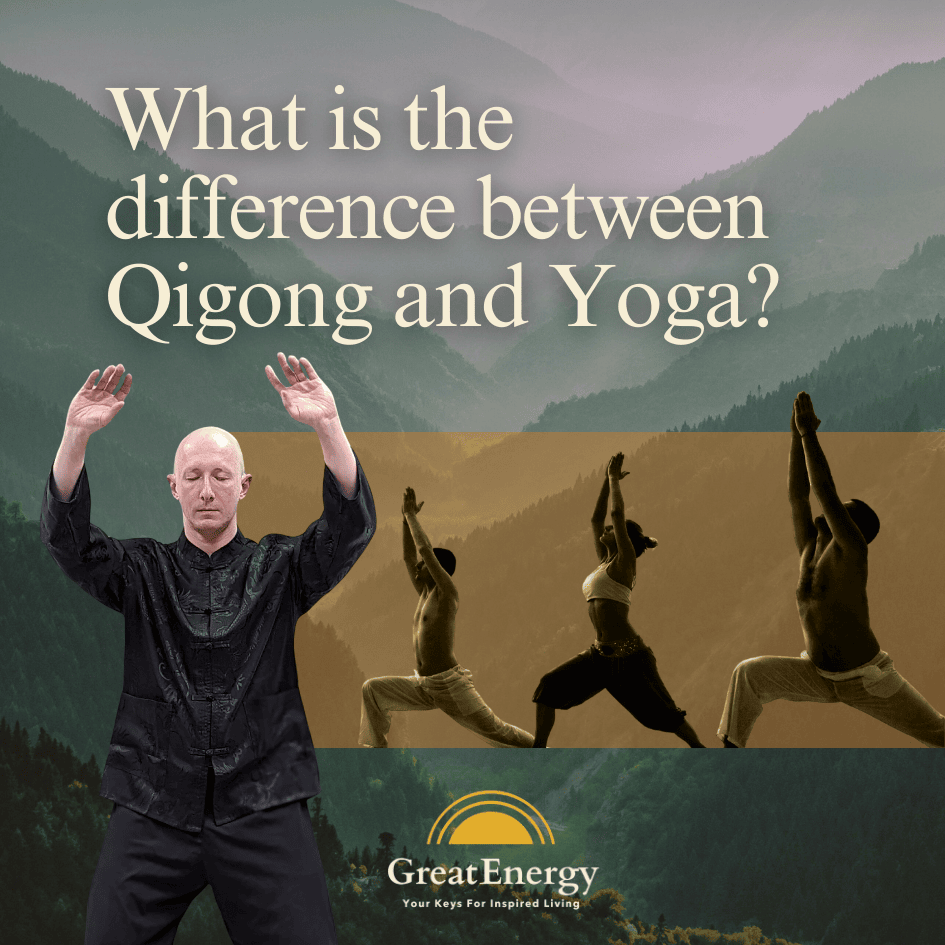
What is the difference between Qigong and Yoga?
On the surface, Yoga and Qigong can look similar. Both use movement, breath, and awareness.
If you’re new to the practice, start with our guide: What Is Qigong? Definition, History, and How It Works.
Both come from ancient traditions. Both are now widely used for health and stress reduction.
The difference is in emphasis.
Yoga often works from the outside in. Postures build strength, flexibility, and endurance. There is usually a clear physical effort, and progress is often measured by range of motion, stability, or the ability to hold a pose.
Qigong works from the inside out. The movements are simpler, slower, and often repetitive. The primary focus is not on stretching muscles but on regulating the nervous system, supporting organ function, and improving how energy moves through the body. The work is subtle, but it’s not passive. It’s designed for supporting natural healing. This is why our Great Energy Qigong is often called ‘Healing Qigong’.
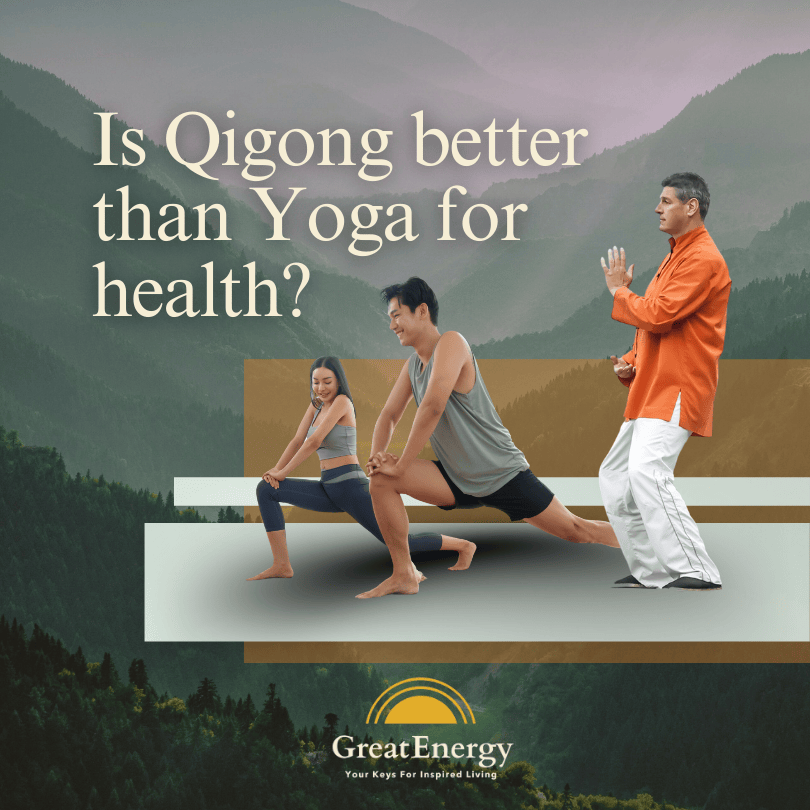
Is Qigong or Yoga Better for Health?
This is where context matters.
Yoga can be incredibly supportive for health, especially when taught with care and adaptation.
I’ve seen students gain strength, confidence, and body awareness through Yoga that changed their lives.
I’ve also seen students who did “everything right” in Yoga and still felt depleted, inflamed, or stuck in cycles of fatigue.
Qigong tends to be especially supportive for people dealing with chronic stress, burnout, autoimmune conditions, fatigue, or recovery from illness. The practice places less demand on joints and connective tissue and more emphasis on restoring balance in the nervous system.
For many students, Qigong doesn’t replace Yoga. It fills in what was missing. Many people encounter Qigong through its therapeutic applications. If you’re curious about the healing tradition itself, you can read more in What Is Healing Qigong and How It Differs from Yoga.
Are Yoga and Qigong Really “Two Sides of the Same Coin”?
The National Institutes of Health published an article titled Yoga and Qigong for Health: Two Sides of the Same Coin? and I appreciate that framing. From a research perspective, both practices are considered mind-body interventions. Both have measurable benefits for stress reduction, emotional regulation, and overall wellbeing.
Where they differ is not in whether they work, but in how they work.
Yoga often emphasizes effort, alignment, and progression. Qigong emphasizes regulation, circulation, and recovery. When you look at them through a health lens rather than a performance lens, they complement each other more than they compete.
Why Is Qigong Less Known Than Yoga?
This isn’t because Qigong is less effective. It’s largely cultural.
Yoga came to the West earlier and aligned easily with fitness culture. It adapted well to studios, clothing brands, certifications, and visible achievement. Qigong developed quietly, often within medical, martial, or monastic traditions, and didn’t package itself for mass consumption.
I often tell students that Qigong didn’t try to become popular. It tried to be useful.
Now that more people are dealing with chronic stress and long-term health challenges, Qigong is being rediscovered because it meets a need that many modern fitness approaches don’t address.
Is Qigong easier on the body than Yoga?
For most people, yes.
That doesn’t mean it’s “easy” in the sense of being ineffective. It means it places less strain on joints, ligaments, and connective tissue. I’ve worked with many students who loved Yoga but reached a point where their body was asking for something gentler and more supportive. If you want to understand what daily practice actually looks like, we explain it in What Is Qigong Practice? Benefits, Meditation, and How to Begin.
One student, a former endurance athlete, came to Qigong after years of pushing through pain. She told me after a few weeks that it was the first time she felt like her body was being listened to rather than trained.
Which practice is more sustainable over time?
This is one of the most important questions, and it’s rarely asked out loud.
I’ve watched students practice Qigong into their seventies and eighties with consistency and benefit. The practice adapts as the body changes. It doesn’t rely on peak strength or flexibility to remain effective.
Yoga can absolutely be practiced long-term, especially when it’s gentle and well taught. But many people quietly stop because they feel they can’t keep up, or because injuries accumulate.
Sustainability matters. Health isn’t about how much you can do at your strongest. It’s about what supports you across seasons of life.
Why Do Many People Move From Yoga to Qigong Later in Life?
This shift often happens when priorities change.
Students tell me they’re less interested in achieving and more interested in feeling healthy and grounded. Less interested in pushing and more interested in recovery. They want to sleep better, digest better, and feel calmer in their nervous system.
Qigong meets people where they are. It doesn’t require them to be flexible, strong, or pain-free to begin. That makes it especially appealing as life gets more complex.
To understand the broader physical effects of the practice, see What Does Qigong Do for the Body?
Can You Practice Qigong and Yoga Together?
Absolutely.
Some of the most grounded practitioners I know use both. Yoga for strength and mobility. Qigong for regulation and recovery. When done with awareness, they support each other beautifully.
The key is listening to the body rather than forcing a formula.
We teach both together in our Great Energy Qigong Certification and Taoist Yoga Teacher Training.
Is Qigong Better for Stress, Fatigue, or Health Recovery?
In my experience, Qigong is often the better starting point.
When the nervous system is overwhelmed, asking the body to perform can backfire. Qigong works by calming, restoring, and gradually rebuilding capacity. Many students tell me that once their system settles, they’re able to return to other practices with more resilience.
Much of Qigong’s effectiveness comes from how it regulates the nervous system and breathing patterns. We explore the physiology in Why Is Qigong So Powerful?
Which Is Better: Qigong or Yoga?
Neither wins. Neither loses.
The better practice is the one that supports your health, your nervous system, and your life right now. For many people, especially those seeking long-term wellbeing rather than short-term gains, Qigong becomes a practice they can return to again and again.
Not because it asks more from them, but because it gives more back.
So, how to get started with Qigong?
Most students begin with our self-paced Great Energy Qigong for Deep Nourishment, or our weekly live-online Qigong classes.
Common Questions About Qigong and Yoga
What is the main difference between Qigong and Yoga?
Both Qigong and Yoga use movement, breath, and awareness. The main difference is emphasis. Yoga typically focuses on physical postures, strength, and flexibility. Qigong emphasizes slow movement, breathing, and regulation of the nervous system to support energy flow and internal balance.
Is Qigong better than Yoga?
Neither practice is universally better. They serve different purposes. Yoga often develops strength, flexibility, and stability. Qigong focuses more on restoring energy, regulating the nervous system, and supporting recovery. Many people find the two practices complement each other.
Is Qigong easier than Yoga?
For most people, Qigong is gentler on the body. The movements are slow, repetitive, and low impact. This makes Qigong especially accessible for beginners, older adults, or people dealing with fatigue, injury, or chronic stress
Can you practice Yoga and Qigong together?
Yes. Many practitioners use Yoga to build strength and mobility while using Qigong to support recovery and nervous system regulation. Practiced together, they can create a balanced approach to physical and energetic health.