
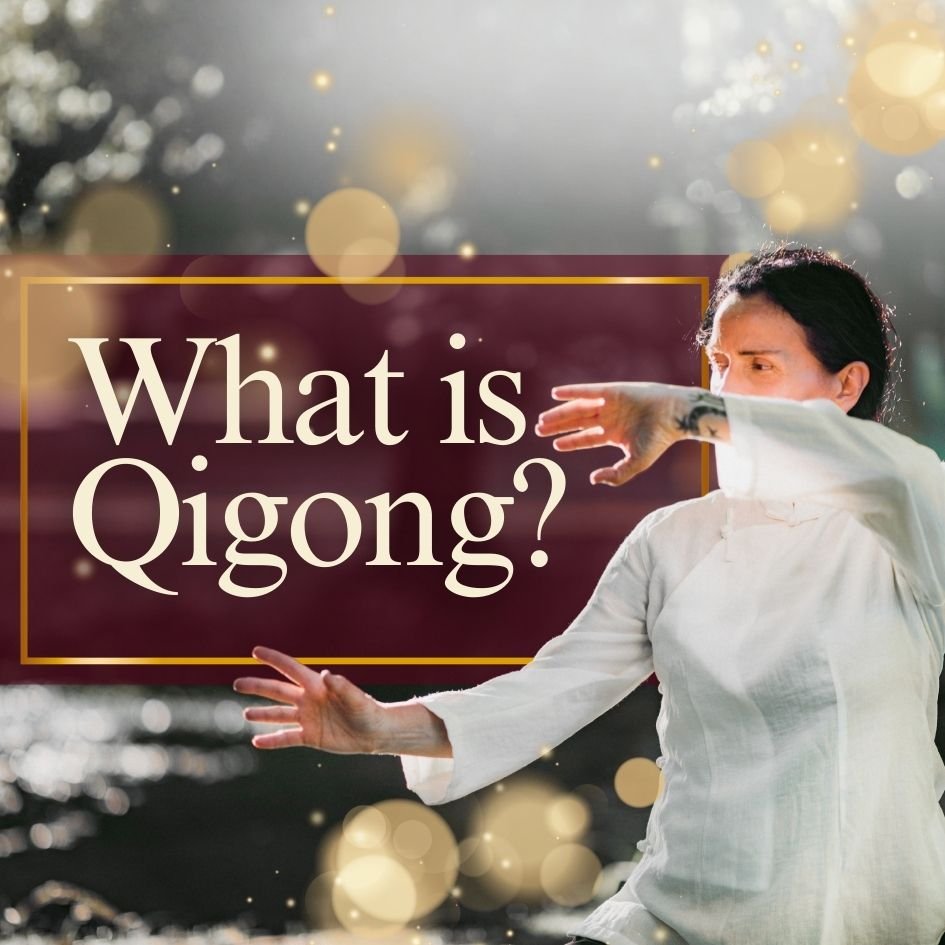
What Is Qigong?
by Christopher Grant, Great Energy
Definition, History, and How It Works
Qigong is an ancient Chinese mind-body practice that combines gentle movement, breath regulation, and focused awareness to cultivate life energy known as Qi.
Practiced for thousands of years, Qigong supports physical vitality, emotional balance, and nervous system regulation through slow movement, breathing, and meditation.
It is both a discipline and a meditation. At its essence, Qigong is the steady cultivation of life energy to support physical vitality, emotional balance, and inner clarity.
If you are looking for a practical beginner guide, including benefits and how to start, see our What Is Qigong Practice? Benefits, Meditation, and How to Begin page.
If you’d like to experience the practice directly, explore these Qigong Exercises for Beginners, which introduce simple movements and breathing patterns commonly used in daily Qigong practice.
In simple terms, Qigong is:
• movement that circulates energy
• breathing that calms the nervous system
• awareness that reconnects you with the body
“We come home to the body through movement, breath, and awareness – that’s Healing Qigong.”
– Daniela Hess
What Does Qigong Mean?
In Traditional Chinese Medicine, Qi refers to the vital energy that animates living systems. When Qi flows smoothly, the body feels resilient and steady. When it becomes stagnant or depleted, symptoms such as fatigue, tension, anxiety, or illness may arise.
Gong translates as cultivation, skill developed through consistent practice.
Qigong therefore means the cultivation of energy through disciplined, embodied awareness.
It is not a single style or sequence, but a broad category of practices unified by intention and breath.
Qigong, then, is both a discipline and a meditation – a way of aligning with natural energy, of nature itself, through movement, breathwork, and the development of awareness.
Where Did Qigong Originate?
The roots of Qigong extend back more than 4,000 years to early Taoist, Buddhist, and medical traditions in China. It developed within a holistic system that included movement, breathwork, acupuncture, herbal medicine, meditation, and ethical living.
Over centuries, Qigong evolved into multiple branches, often grouped into three primary expressions:
Medical Qigong – focused on restoring health and vitality
Martial Qigong – designed to develop strength and resilience
Spiritual Qigong – oriented toward meditation and inner clarity
Today, Qigong is practiced worldwide in hospitals, research settings, rehabilitation programs, and wellness communities as a structured method for stress regulation and whole-body support.
How Does Qigong Work?
Qigong can be understood through both energetic and physiological frameworks.
Energetically, it supports the circulation of Qi through the body’s meridian system, helping restore harmony and balance.
Physiologically, research suggests Qigong practice may:
lower stress hormones such as cortisol
improve heart-rate variability and vagal tone
support immune function
reduce systemic inflammation
improve sleep, mobility, and balance
Through slow, intentional movement and regulated breathing, Qigong shifts the body out of sympathetic fight-or-flight activation and into parasympathetic rest-and-restore regulation.
In modern language, Qigong is nervous system training.
For a deeper look at how Qigong supports stress regulation, you may also explore Have You Ever Tried to Think Your Way to Calm?
“Energy follows awareness. When you slow down and pay attention, the body begins to remember its rhythm and harmony.”
– Christopher Grant
Is Qigong the Same as Tai Chi?
Qigong and Tai Chi share common roots in Chinese medicine and Taoist philosophy, and both integrate movement, breath, and awareness.
However, they are not identical.
Tai Chi developed primarily as a martial art, with longer choreographed sequences and self-defense applications.
Qigong is typically simpler and more adaptable, emphasizing energy cultivation, healing, and nervous system regulation rather than memorized forms.
Because of its flexibility and accessibility, Qigong is often easier for beginners and those recovering from stress, injury, or illness.
Who Can Practice Qigong?
Qigong is adaptable and accessible.
It can be practiced standing, seated, or lying down. Movements are typically low-impact and can be adjusted to different physical capacities.
Because it emphasizes pacing and awareness, Qigong is especially supportive for:
Individuals recovering from burnout or chronic stress
Those navigating fatigue or chronic illness
Older adults seeking mobility and balance
Professionals in healing, coaching, and movement arts
Consistency matters more than complexity. Even brief daily practice can produce measurable shifts in energy and clarity.
Many of our students first come to Qigong during midlife, when they begin noticing subtle changes in stiffness and recovery.
Practitioners often include:
Life and health coaches
Acupuncturists and Chinese-medicine practitioners
Reiki, energy, and intuitive healers
Massage therapists and somatic practitioners
Meditation teachers and mindfulness facilitators
Can Qigong Be Learned Online?
Yes.
Recent studies indicate that virtual Qigong training can produce improvements in mood, mobility, and quality of life comparable to in-person instruction.
Structured guidance can refine mechanics, deepen understanding, and provide accountability. Many practitioners begin with beginner programs such as Beginning Healing Qigong, or our weekly live community Qigong classes, and some choose to pursue deeper study through structured professional pathways like Great Energy Healing Qigong Immersion and Teacher Certification.
“The quality of your energy determines the quality of your experience of your life.”
– Daniela Hess
What Are the Benefits of Practicing Qigong?
Both historical experience and modern research suggest that regular Qigong practice may:
• improve energy and stamina
• support cardiovascular and respiratory health
• regulate mood and stress responses
• reduce chronic pain and inflammation
• enhance balance, coordination, and flexibility
• cultivate emotional steadiness and mindfulness
For a detailed overview of benefits and how to begin practicing, visit our Qigong Practice Guide.
Many students also wonder what the practice actually does physically. We explore that in What Does Qigong Do for the Body?
Is Qigong Good for Beginners?
Yes.
Qigong is one of the most accessible mind-body practices available. Movements are slow, adaptable, and can be practiced by people of many ages and physical conditions.
You do not need to be flexible.
You do not need prior experience.
You do not need to identify as spiritual.
You only need curiosity and a willingness to move slowly.
Many beginners start with structured guidance such as our Jump Start Your Energy class or Beginning Healing Qigong course.
Frequently Asked Questions About Qigong
What is Qigong?
Qigong is a traditional Chinese practice that combines gentle movement, breath regulation, and focused awareness to cultivate life energy and support physical and emotional wellbeing.
What does Qi mean?
Qi refers to the vital life energy that animates living systems. In traditional Chinese medicine, health is associated with the smooth circulation of Qi throughout the body.
Is Qigong meditation?
Yes. Qigong includes both moving meditation and still meditation practices that cultivate awareness and internal balance.
How often should you practice Qigong?
Even five to fifteen minutes of daily practice can improve energy, calm the nervous system, and build resilience over time.
Can Qigong help with stress?
Many practitioners find that Qigong helps regulate the nervous system by combining slow breathing, gentle movement, and mindful attention.