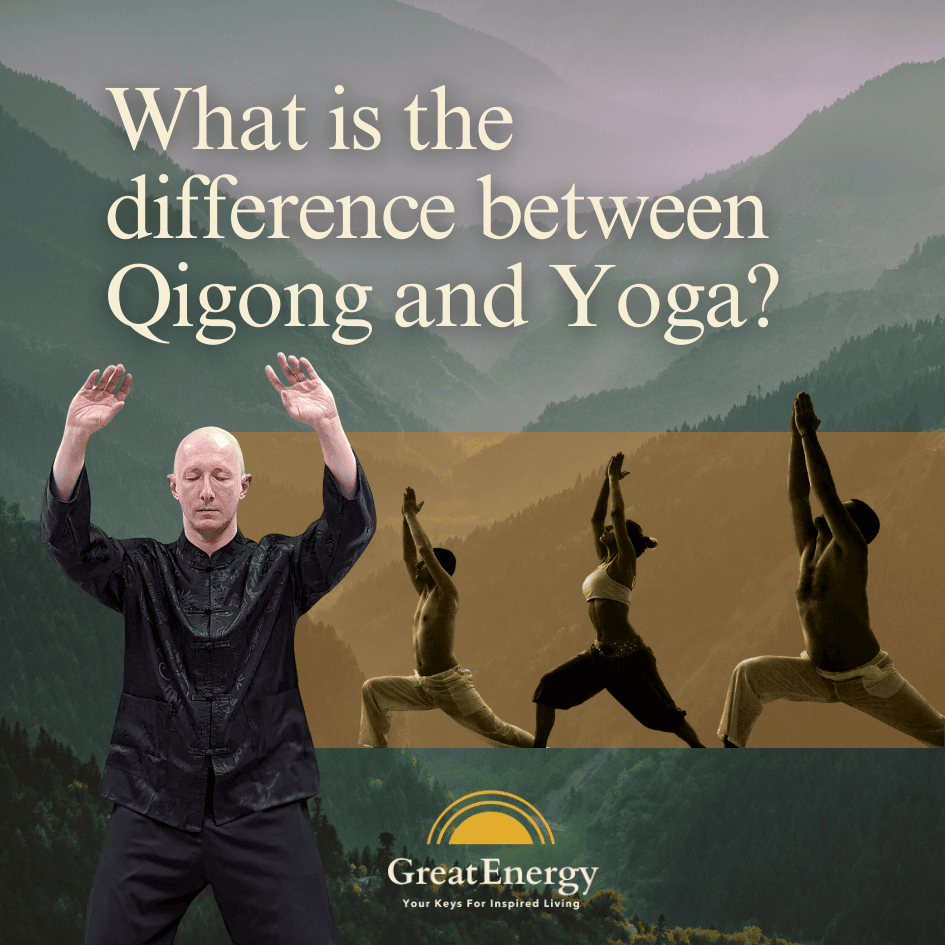
Qigong vs Yoga: Which Is Better for Your Health? (Quick Answer)
TL;DR version if you find the full article ‘too long didn’t read’
People ask me all the time which is better, Qigong or Yoga. I’m certified in both, and I understand why the question comes up. From the outside, they can look similar. They’re both ancient practices. They both work with breath, movement, and awareness.
And research, including NIH-published studies, even describes them as two sides of the same coin. But after years of practicing, teaching, and watching students live with these practices over time, I’ve learned that the real answer isn’t about which one is better. It’s about how your body responds, what you’re carrying, and what kind of support you actually need right now.
Yoga often works through strength, flexibility, and effort.
Qigong works through regulation, breath, and internal balance.
For many people, especially those dealing with stress, fatigue, pain, or health challenges, Qigong becomes easier to sustain long term. That’s something I’ve seen again and again in my students, and it’s something I’ve experienced myself.
If you’ve ever wondered:
what the real difference is between Qigong and Yoga?
why Qigong is less known?
which practice supports health over time?
or whether one is better for stress and nervous system regulation?
I wrote a full, educational article answering those exact questions, using research, student case studies, and my own experience teaching both practices.
👉 Read the full article here:
Qigong vs. Yoga: How Are They Different and Which Is Better?
That article walks through the deeper comparison between the two traditions, including how they affect the nervous system, the body, and long-term health.
And if you’re curious about the healing side of the practice itself, I also wrote a companion article explaining how Healing Qigong works and why it’s used in traditional Chinese medicine:
👉 What Is Healing Qigong? Benefits, Practice, and How It Differs from Yoga
This isn’t about choosing sides.
It’s about choosing what supports your health now, and what you can return to for years to come.
If you're looking to practice from home, our guide to the best online Qigong platforms covers what to look for and how different options compare.